BRUSH AFTER EACH MEAL
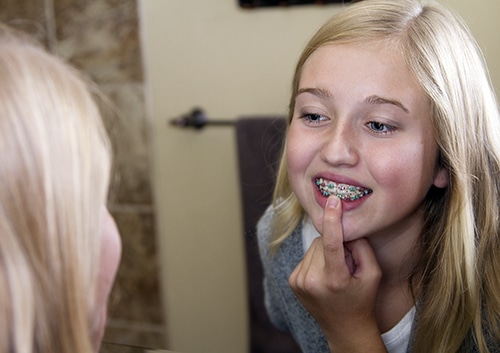
Wearing braces will mean you’ll need to get out of your normal oral care routine and pay more attention to your brushing. A layer of tiny food particles and bacteria, known as plaque, clings to your teeth after you eat. If you don’t clean your teeth properly, over time, you may develop gum (periodontal) disease. Teeth become weak and will develop white spots; these spots will remain on your teeth after your braces are gone. Plaque is very sneaky and hides in your wires, bands and brackets. Brushing as soon as you can after each meal will help thwart plaque build-up.
A SPECIAL TOOTHBRUSH AND OTHER TOOLS COULD HELP
Your normal toothbrush may not be getting the job done when it comes to removing all the bits of food in your braces. So you’ll need to add another brush to your regimen called an interproximal or interdental toothbrush. This nylon brush is great for getting food off your braces and teeth. It should be used after your two minutes of regular brushing. Simply put the interdental brush bristles between your wire and teeth and slide it up and down to clean the brackets, teeth and archwire.
Don’t forget to use a floss threader to help with flossing your lower and upper teeth and gum line. Move the floss back and forth along the surface of and in between your teeth to clean them. A water flosser is also a terrific option for all the hard-to-reach-areas. What’s a water flosser? It’s an electric flosser that gently sprays water to loosen and remove plaque from braces and in between teeth—it can actually feel quite refreshing! These are great extra tools you can use to help prevent tooth decay while undergoing orthodontic treatment.
RESPONSIBLE EATING
No doubt you’ll get a list from your orthodontist of what you can’t eat while wearing braces. High on that list are things like pretzels, popcorn seeds (or any hard seed), nuts and any kind of chewy food such as gummy bears, taffy and caramel. Chewing on gum and ice are big no-no’s, too. Eating any of these foods will break or damage your braces, causing you to need repair and wear them longer than you intended.
But don’t despair! The list of foods you can enjoy is a lot longer—and, yes, fully popped popcorn is on the list. Just keep in mind you’ll need to brush and floss immediately after eating it. Other things such as oatmeal, fruit bars, grapes, yogurt and bananas are on the “good” list, too. It’s also a good idea to slice veggies and other fruits into bite-sized pieces so that you can just pop them in your mouth. Biting into something like a carrot stick or whole apple can damage your braces.
If you get a craving for something sweet, cakes, cookies, a plain chocolate bar, pies and ice cream (without nuts) are fine in moderation.
USE MOUTHWASH
So you’ve brushed and flossed, that’s enough to prevent tooth decay, right? Well, it may not be. There might still be stubborn bits of food that just don’t want to budge. Using a fluoride mouthwash will definitely help—and you’ll have fresh breath as well as the knowledge of having protection against plaque build-up.
REGULAR ORTHODONTIST VISITS
It’s essential that you maintain your schedule for regular check-ups. Every 3-6 months your orthodontist will want to tighten your braces, make other adjustments and inspect your brushing and flossing. Of course, if you’re having a problem with your braces in between check-ups—like a band falling out or a wire poking into the inside of your mouth—you’ll need to schedule a visit to get it fixed.
When you’re wearing braces keeping plaque-free gums and teeth won’t be easy. Yet with the proper tools, extra effort on your part and your orthodontist’s help your mouth will be healthy the entire time you wear braces.
PREVENT TOOTH DECAY: CONTACT US TODAY
If you’ve got questions or need more tips about keeping your teeth and gums healthy while undergoing orthodontic treatment, feel free to contact us! Our team at Wake Orthodontics & Pediatric Dentistry is here for you, every step of the way!